Before anything else
One thing to know before anything else
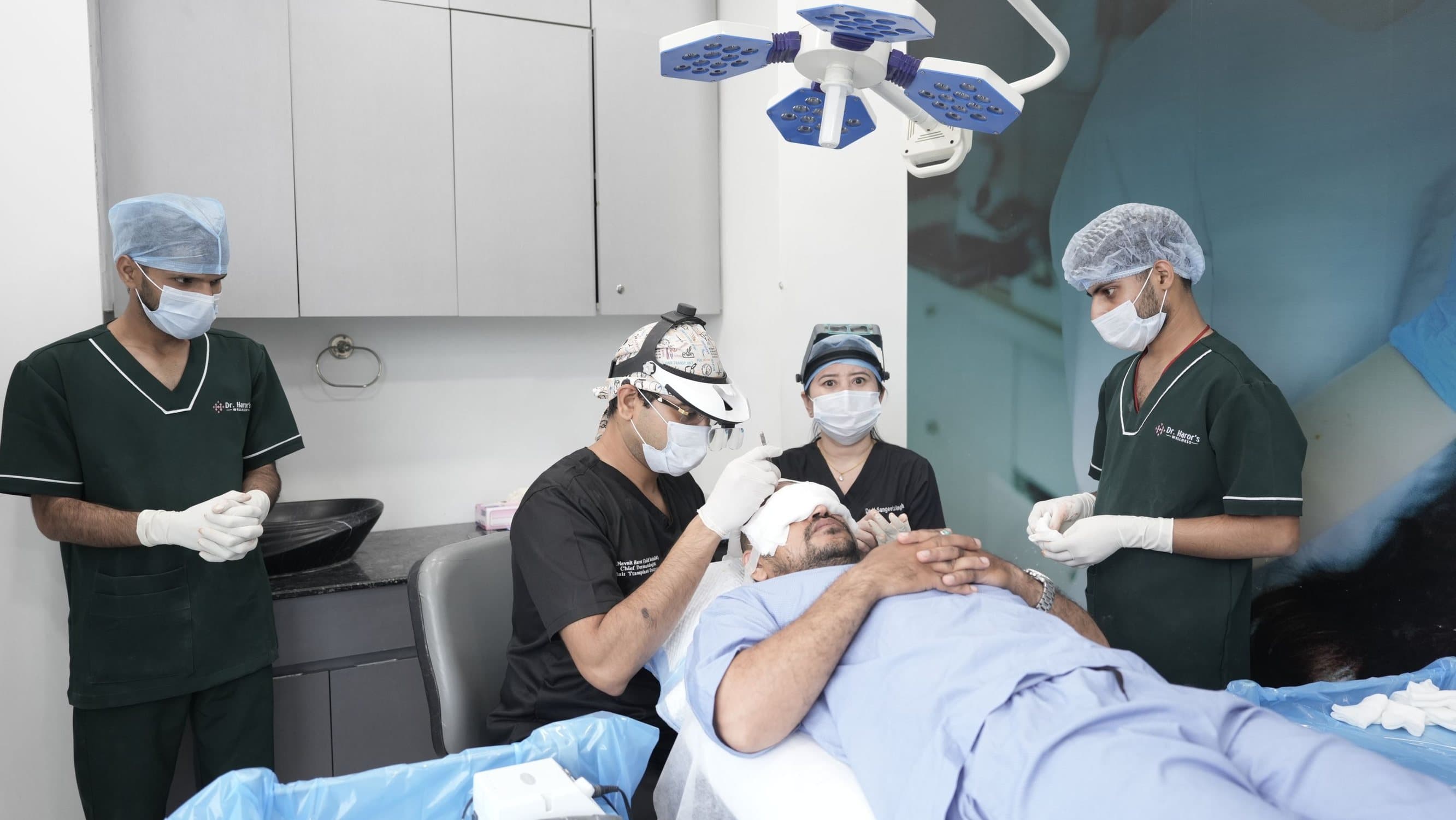
A hair transplant doesn't grow new hair. It moves the hair you already have. A surgeon takes hair from the back and sides of your head, where the follicles are naturally resistant to the hormone that causes male pattern baldness, and moves it to the front or the top, where they aren't. The moved hairs keep their resistance, so they stay. That's the whole trick, and it works.
What it doesn't do is touch the process that's thinning everything else. Every hair that wasn't moved carries on exactly as it was going to. So a man who has a hairline transplanted at 35 and does nothing else can find himself at 40 with a dense, permanent strip of hair at the front and a widening gap of thinning behind it.
Surgeons call it the island effect.
It's the reason so many men end up back in the chair for a second procedure they weren't told about the first time.
The way to avoid it is to stabilise the loss before you operate. That means treatment, usually for around a year, so that a good surgeon can see where your hair loss is settling and plan for the head you'll have at 50, not the one you have today. Most reputable surgeons will tell you this themselves. If one doesn't, that tells you something about the clinic.
Cost
How much does a hair transplant cost in Colchester?
Colchester hair transplant prices
A hair transplant at a reputable hair transplant clinic in Colchester typically costs between £3,000 and £8,000, but some men end up paying more than £10,000. A few things impact the price:
- How many grafts you need
- The surgeon's technique
- The surgeon's reputation
- Who does the extraction and placement
Make sure you compare like with like on graft numbers and on who does the operating.
Per-graft pricing, and how to check a quote
Most clinics quote per graft, where a graft is a small bundle of one to four hairs. In the UK, expect roughly £2 to £5 per graft, with the best-known surgeons at the top of that range. How many you need depends on the area - a receding hairline and temples usually takes around 1,500 to 2,500 grafts. The front and crown together takes around 3,000 to 4,500. More than that and you're into two sessions, which significantly increases the cost. So a 2,000-graft hairline at £2 a graft is £4,000. Do the maths on every quote.
Turkey and abroad
Istanbul is the hair transplant capital of the world for a reason - a full procedure, hotel and airport transfers in an all-inclusive package usually costs between £1,500 and £4,000. It's cheaper because labour costs are lower, clinics do enormous volumes, and in most of them technicians rather than the surgeon do the extraction and placement. You may not meet the surgeon at all.
What you gain is obvious - it's considerably cheaper. However, in some clinics, you may be giving up proper aftercare, follow-up appointments you can actually attend, someone to see quickly if something goes wrong, and legal recourse if it goes badly wrong. It's worth knowing that a growing part of the UK hair transplant business is repairing work done abroad, and repairs can cost more than doing it right once.
A clinic in England has to be registered with the Care Quality Commission and its surgeon has to be on the GMC register, both of which you can check online in two minutes. Neither applies if you're looking to get a hair transplant abroad.
What's included, and what isn't
Ask for the full list. Consultation fees, pre-operative blood tests, the procedure itself, medication for the first weeks, follow-up appointments at 6 and 12 months, and revision if grafts don't take. And most importantly, ask for the surgeon's name and the clinic's CQC registration, so you can check both before you pay a deposit.
Then ask about the extras - PRP injections and "growth factor" treatments that clinics increasingly bundle in as standard, the ongoing treatment you'll need to protect the rest of your hair, and, for some men, the second procedure five or ten years later. The true cost of a transplant over ten years is rarely the first invoice.
How it compares with treatment
For pattern hair loss, the most effective prescription treatments that protect your hairline and often regrow hair at the crown cost a small fraction of a transplant over the same period, with no surgery and no time off. This isn't an either/or choice - nearly every man who has a transplant should be on treatment too. But a lot of men who think they need surgery find that after a year of treatment, they don't actually need a hair transplant.
Your donor area can only be used once
The hair on the back and sides of your head is the only hair that can be moved, and there's a fixed amount of it that can be safely taken over your whole lifetime. For most men that's somewhere between 5,000 and 7,000 grafts in total. Take more, and the donor area itself starts to look thin.
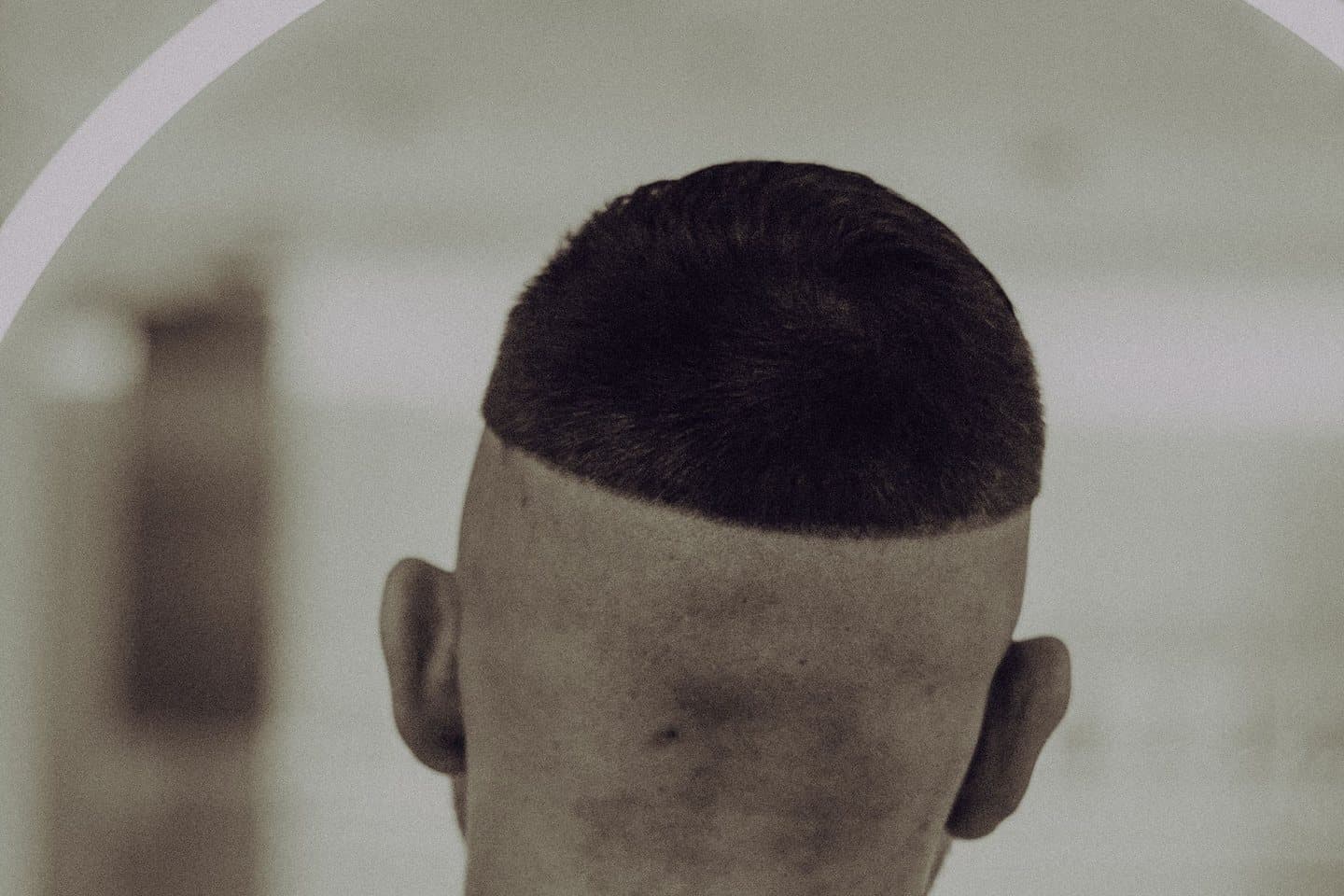
Each graft can only be used once. If you spend 3,000 of them on a low, dense hairline at 30, there's very little left for the crown that starts going at 40, and nothing for the hair loss that carries on through your fifties. A good surgeon plans the whole lifetime - where you'll thin next, how much to keep in reserve, how to make a limited supply cover an area that will keep growing.
Candidates
Who is actually a candidate?
Not everyone is a candidate for a hair transplant, and a good clinic will say so.
A good candidate
You have male pattern baldness, confirmed, not shedding or a scalp condition. Your hair loss has been stable for about a year, usually because you've been on treatment like finasteride. You have a dense donor area at the back and sides. You're old enough that your pattern is clear, which in practice means late twenties or older. And you understand what a transplant can and can't do.
A poor candidate
You're under 25 with early hair loss. No surgeon can predict where your hair loss is going, and a hairline placed for a 23-year-old is often wrong by 40. Your thinning is all over, including the back and sides, so there's no safe donor area, and moving thin hair to a thin area achieves nothing. Your loss is very advanced with a limited donor supply, so the maths doesn't work, and an honest surgeon will tell you so.
Women
A transplant is rarely the right first step for women. Female pattern hair loss usually thins across the whole top of the head rather than receding, and the donor area at the back is often affected too, so there isn't enough resistant hair to move and the loss carries on around whatever's transplanted. There are always exceptions - a stable, well-defined area of loss at the front with a genuinely strong donor area, or hair lost to an old injury or a surgical scar. For most women, hair loss treatment like minoxidil is the right first step.
Never if it's undiagnosed
You shouldn't receive a hair transplant if you're experiencing shedding, or have an inflamed or scarred scalp, have active alopecia areata or an active scarring alopecia, or hair loss that hasn't been properly diagnosed. Patchy loss, a sore or inflamed scalp, or hairline and eyebrow thinning in women should be seen by a GP first.
Treat the crown, transplant the hairline
The crown is the worst place to transplant hair. It's a large area, the hair grows in a swirl that swallows grafts without looking any thicker, it takes enormous numbers for a modest visual return, and it's the area that keeps expanding as you age, so whatever you fill today has a widening ring of thinning around it tomorrow. It's also, as it happens, the area where hair loss treatment works best. Crown hair responds better to the prescription treatments for pattern hair loss than the hairline does, and a lot of men see genuine regrowth there within a year.
The hairline is the exact reverse. Treatment will usually hold it where it is, but it rarely brings back what's already receded. Surgery, on the other hand, gives the biggest visual change per graft anywhere on the head, because the hairline frames your face and a few thousand well-placed grafts changes how you look in every photo.
So the plan many good surgeons arrive at is medication for the crown, surgery for the front, if surgery at all. Spend your grafts where they show, and let treatment do the job at the back. A clinician will check if hair loss treatment is right for you.
The procedure
FUE, FUT and the words clinics use
You'll meet a lot of acronyms. Here's what they mean and, more importantly, what they mean for you.
- FUE (follicular unit extraction) is what nearly everyone does now. Individual grafts are punched out of the donor area one at a time and placed into tiny incisions in the thinning area. It leaves thousands of dot scars that are invisible unless you shave very close, and recovery is quick. It usually means shaving the donor area, often the whole head.
- FUT (the strip method) removes a thin strip of scalp from the back, which is stitched closed, and the grafts are cut from that. It leaves one linear scar, hidden under hair of about a centimetre or more, and it can harvest a lot of grafts in one session.
- DHI, "sapphire" FUE, "micro" FUE, robotic and the rest are variations of FUE using different tools. They are marketing names more than different operations. None of them changes the answer to the question that actually matters - who is holding the instrument, and how good are they at planning a hairline?
Ask them to draw the hairline you'll want at 55
Every man walks into a consultation wanting the hairline he had at 20. The good surgeons won't give it to you, and it's worth understanding why before you sit down.
A hairline that looks right on a 20-year-old sits low on the forehead and runs fairly straight across. On a man of 50 with grey hair and a face that's aged normally, that same hairline can look wrong - too low, and too dense at the front. It also spends a huge number of grafts to fill the corners, grafts that the man will badly want back if his crown goes at 55.
A good surgeon draws what's called a mature hairline - a little higher than you'd choose, with the temples set back more than you'd like, and slightly irregular rather than ruler-straight. It looks natural now and it will still look natural when you're grey.
What good and bad results look like
A good result is one you can't see. A hairline at a mature height, slightly irregular the way real hairlines are, with density that reads as normal rather than thick, single hairs at the very front and thicker grafts behind them, all angled the way the hair around them grows. And a donor area at the back that looks like nothing happened.
A bad result is usually one of four things:
- A hairline drawn too low and too straight for a man who'll keep losing hair
- Grafts placed in visible rows or clumps
- A donor area harvested too hard, with a thin, patchy look on the back and sides
- The island effect - a transplant that survived beautifully, surrounded by hair that didn't
The men who regret it mostly don't regret it because it failed. They regret it because it worked, and everything around it carried on going. Or because the hairline that looked brilliant at 28 looks odd at 45. Or because they took the cheapest quote and now can't have the haircut they want. The regret forums are full of technically successful transplants.
Can you hide it? Honestly, not for two weeks
This is the fear men in their thirties and forties have and rarely say out loud. Not the pain, not the cost. But being seen.
FUE usually means shaving the back and sides, and often the whole head, on the day. For the first few days your forehead and sometimes your eyes swell. For ten to fourteen days the transplanted area is red and scabbed and looks like a rash on the front of your head. The donor area looks like a bad shave with a spatter of tiny dots. Then, a few weeks in, most of the transplanted hairs fall out, which is normal and expected and still alarming, and for a couple of months it looks like nothing happened. Then, slowly, from around month three, fine new hairs start to appear, and it's a year before you're looking at the result you paid for.
Most men take one to two weeks off work and either wear a hat or have a story ready. If you work somewhere you can't wear a hat, or you have a wedding, a holiday or a big meeting in the fortnight after, plan around it.
Your options
What happens if you do nothing
Men in their thirties and forties usually weigh three options, though clinics only ever talk about one. Here's the ten-year view of each:
Do nothing
Male pattern baldness doesn't stop on its own. For many men, a receding hairline at 35 becomes a receding hairline and a thinning crown at 40, and the two areas start to join up through the mid-forties. Hair that has fully gone doesn't come back without surgery. Doing nothing is a perfectly valid choice, plenty of men make that decision, but it's worth making that choice knowingly.
Treatment alone
The prescription treatments for pattern hair loss hold the loss roughly where it is in most men who take them, and often regrow a meaningful amount at the crown. The hairline often stays where it was, it rarely comes forward. Treatment means no surgery, no downtime, and no one knowing. But it's a daily commitment, and if you stop, the loss gradually resumes.
Treatment plus surgery
This is the most expensive route, but it's only worth doing once the first year of treatment has shown a surgeon where you're settling, so that the grafts go where they'll still make sense at 55.
Whichever way you lean, the first step is the same, and you can do it today. Take our assessment and find out if you're experiencing pattern hair loss. Start treatment if a clinician agrees it's right for you. If you still want a transplant, put a surgeon's consultation in the diary for twelve months from now.
Why medication comes first, and continues after
Before surgery, a year of treatment does three things:
- It tells the surgeon where your loss is heading, so the plan is built for your future head rather than your current one.
- Your hair often regrows enough at the crown that the transplant can concentrate on the hairline, which is where it counts.
- Sometimes it does enough on its own that surgery stops being necessary. Good surgeons routinely send men away for a year on treatment, and a proportion of them never come back, because they don't need to.
For most men with pattern hair loss the usual first treatment is a daily tablet. For women it's low-dose oral or topical minoxidil. A clinician will check what's right for you.
Beard and eyebrow transplants and hair implants
Beard and eyebrow transplants use exactly the same FUE technique, moving scalp hair to the face, and they cost roughly the same per graft. Everything on this page about who's doing it, mature planning and realistic density applies to them too.
"Hair implants" is nearly always just another phrase for a transplant. Occasionally it means synthetic fibre implants, artificial hairs anchored into the scalp, which are a different and much riskier thing associated with infection and rejection. Most reputable UK clinics don't offer them.
How it works
Our Colchester hair loss clinic
Take the assessment
Take the 2-minute assessment. It works out whether what you've got is pattern hair loss, shedding, or something a GP should see, and gives you one clear next step.
Today
Clinician review
If it's pattern loss, you'll be directed to an online consultation with our pharmacy partner, The Independent Pharmacy, registered with the General Pharmaceutical Council. A prescribing clinician reviews your consultation and checks if treatment is right for you. Anything prescribed is posted in plain packaging.
This week
Track it in photos
If you're prescribed treatment, you can expect a short-lived shed in the first couple of months while old hairs make way for new growth. After that, progress is slow and hard to see in the mirror, so take photos every three months to track it. By twelve months, you'll know whether treatment alone is enough, or whether a hair transplant is still worth considering.
Months 1 to 12
Decide on surgery
By now your hair should have stabilised, and your photos will show where your hair loss has settled. That's the right point to decide whether surgery would add anything. For some men, treatment alone is enough. For others, a transplant is still worthwhile, and it's likely to give a better result than it would have a year earlier, because the hair around it is now being protected.
Month 12
Hair transplant Colchester FAQs
All-inclusive packages in Istanbul usually cost £1,500 to £4,000 including hotel and transfers, against £3,000 to £8,000 for most procedures in Colchester. The saving is real, but so are the trade-offs on aftercare, follow-up, recourse and knowing who did the work.
Roughly 1,500 to 2,500 for a receding hairline and temples, or 3,000 to 4,500 for the front and crown together. Most men have only 5,000 to 7,000 grafts available in their whole lifetime, so be wary of any quote that spends most of them at once.
The transplanted hairs are, because they keep the resistance they had at the back of your head. The hair around them isn't, and carries on thinning unless you treat it. That's why surgeons recommend ongoing treatment after a transplant.
Most surgeons recommend treatment for pattern hair loss both before and after surgery, to stabilise the loss and protect the hair that wasn't moved. Which treatment, and whether it's right for you, is something a clinician will check. Stopping treatment after a transplant is the commonest reason men end up needing a second one.
Transplanted hairs shed at weeks 2-8, which is normal. Shock loss is when existing hair near the surgery sheds too. It's usually temporary but a reason to be on treatment before surgery.
Sometimes, but rarely as a first step. Female pattern hair loss thins across the whole top and often the donor area too, so there's usually not enough resistant hair to move. Treatment, such as minoxidil, is the right first step. Exceptions include a stable, well-defined area of frontal loss or loss from a scar.
If you're under 25, the answer is almost always yes. Your pattern of loss hasn't declared itself, and a hairline placed for a 23-year-old is often wrong by 40 and spends grafts you may need later in life. Stabilise your hairline on treatment first, and revisit the question in your late twenties or thirties.
The procedure is done under local anaesthetic, and most men describe it as uncomfortable rather than painful, with a sore scalp for a few days. You can expect scabbing, redness and swelling for ten to fourteen days, one to two weeks off work, shedding of the transplanted hairs at weeks two to eight, and the final result at twelve to eighteen months.
No, not for male or female pattern hair loss. The NHS treats it as a cosmetic procedure, so it isn't funded, and the prescription treatments for pattern hair loss aren't usually available on the NHS either. The rare exceptions are reconstructive cases, such as hair lost to burns, surgery or trauma, where an NHS plastic surgeon may consider it. If your hair loss is patchy, sudden or comes with a sore or inflamed scalp, your GP is still the right first call, because that's a diagnosis question rather than a cosmetic one.
First, search the clinic at cqc.org.uk - hair transplant surgery in England is a regulated procedure, so the clinic has to be registered with the Care Quality Commission and its latest rating will be there. If it isn't listed, or they say they don't need to be, walk away.
Second, search the surgeon at gmc-uk.org - the operation should be performed by a doctor, and the name you check should be the person operating on the day, not a medical director on the website while technicians do the work.
Third, ask if the surgeon is a member of BAHRS or ISHRS. Neither is a regulator, but both have codes of practice on who does what in theatre, and a surgeon who belongs has chosen to be held to that standard. Make sure you run the checks on the clinic you'll actually be treated at, not the consultation office nearest you. And if you're quoted before a surgeon has examined your scalp, treat the quote as marketing rather than an actual plan.
About the author

Kate Holohan
RIT · Cert Ed · Registered Trichologist
Kate Holohan is a registered trichologist and the founder of Hair Therapy UK, an award-winning trichology clinic in Kings Hill, Kent. She has worked with hair and scalps for more than 30 years, first in hairdressing and education. She then trained in trichology with the Institute of Trichologists.
Kate diagnoses and treats hair loss and scalp conditions in adults and children. Her work covers female pattern thinning, shedding, alopecia, hair loss linked to hormones, menopause, thyroid and medication, and scalp conditions such as psoriasis and seborrhoeic dermatitis. She also supports people with medical hair loss from cancer treatment and surgery. She hosts the Hair Therapy podcast, which has more than 200 episodes on hair health and real patient stories. Kate has spoken at the World Trichology Conference.
Her approach starts with a careful consultation to understand what is driving the hair loss before recommending a plan. She works with a wide referral network that includes dermatologists, prescribers and blood-testing services, so people get to the right specialist.
- Professional registration
- RIT (Institute of Trichologists, Registrant)
Medically reviewed
This page was last medically reviewed by Kate Holohan on .

Kate Holohan
RIT · Cert Ed · Registered Trichologist
Colchester Hair Loss Clinic is committed to providing clear, accurate and evidence-based information about hair loss, hair thinning, scalp conditions and their treatment.
Our content is reviewed at least every 12 months to reflect current UK clinical guidance. All treatment pathways described on this website are subject to individual clinical assessment and review.
Read our editorial policy to see how our content is written, reviewed and kept up to date.
